Media, culture, and politics from an aesthetic-materialist's perspective.

Showing posts with label united states. Show all posts

Wednesday, October 17, 2007

Improper Color

My Finnish friend Lissu, who's working at the United Nations this fall, sent me this unintentionally funny website by the United States government. It guides prospective applicants to the government's Diversity Immigrant Visa Program (DIV) on how to compose an acceptable application photograph. Now the DIV is interesting in that it operates on a lottery basis; according to Wikipedia, "The Act [legislating the DIV] makes available 50,000 permanent resident visas annually to persons from countries with low rates of immigration to the United States." So clearly one of the things the program is looking for is "diversity" among immigrants themselves -- a veritable rainbow coalition of those desiring a Green Card.

But as you can see on this website, the DIV's imagining of diversity comes across as offensive in its effort to manage politically correct images. We have subjects of different hues and colors represented here, which is the liberal multiculturalist gesture. Yet the DIV's articulation of how not to compose an application photo turns these very "diverse" subjects into stereotyped caricatures of themselves.

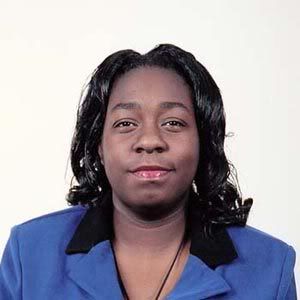
Here's a "well-composed" photo of one applicant:

Photo Sharing and Video Hosting at Photobucket

And here's what not to do: No Retouching

Photo Sharing and Video Hosting at Photobucket

Do:

Photo Sharing and Video Hosting at Photobucket

Don't do: Glare on Glasses

Photo Sharing and Video Hosting at Photobucket

See what a slight tilt of the head can do to your photo?

And, perhaps most egregious of all, Do:

Photo Sharing and Video Hosting at Photobucket

Don't do: Improper Color

Photo Sharing and Video Hosting at Photobucket

The effect of these "do not do" images is to render the rainbow coalition into a melting pot o' ridiculousness. The DIV might have relayed the same information without using such loaded images -- so obviously pc-conscious that they become parodies of themselves when re-figured by clownish scribblings and inept lighting. Lissu probably put it best in the subject line of her e-mail when she scoffed, "Yeah, 'improper color.'"

Tuesday, July 24, 2007

I'll Show You My Exchange Rate If You Show Me Yours

Here's a fine article from Slate.com on the economic implications of a weak U.S. dollar. Its author, Daniel Gross, points out that a weak U.S. dollar has meant an increase in tourists who visit the States to take advantage of comparatively cheap (with regard to other developed countries) goods, services, and investments (including real estate). Gross writes, "The money tourists spend helps put a dent in our chronic trade deficit. So do exports, which, thanks in part to the weak dollar, soared 11 percent between May 2006 and May 2007. For the first five months of 2007, the trade deficit actually fell 7 percent from 2006."

Gross also reminds us the weak dollar has benefited those U.S. corporations that rely heavily on foreign sales:

If you—or your mutual fund—own shares in large American corporations, you're a winner in the weak-dollar sweepstakes. Based on data culled from 238 constituents of the Standard & Poor's 500 Index, S&P analyst Howard Silverblatt concludes that the typical member of the index garnered 44.2 percent of its sales outside [emphasis mine] the United States in 2006. Translating cash received from those sales into weaker dollars puts some fizz into earnings. Last week Coca-Cola's stock bubbled to a five-year high after it reported a fantastic quarter. Foreign sales accounted for 65 percent of Coke's beverage business. Other ur-American companies profiting from this trend include McDonald's (65 percent of sales overseas) and IBM (56 percent).

So if U.S. corporations are able to produce goods that sell comparatively higher in Europe than they do in the States (again, owing to the weak dollar), then Coke and its internationally friendly ilk are not terribly troubled by the current state of the U.S. dollar.

I wonder what the implications of such overseas profitability are for domestic jobs. It's true that U.S. corporations are profiting from high sales in Europe and Canada, but I'm not sure if that necessarily translates into more jobs or better employment conditions (e.g., wages) for employees of those corporations.

One thing is for sure: there's no better time (or excuse) for all my European and South American friends to come and visit me in Durham, North Carolina -- especially Durham, where you can buy a pack of Camel Lights for under $3.50; you can buy a decent used car for under $3,000 (as I did recently); and you can order, until 3am, 7 days a week, a meal "tray" consisting of a burger, two sides, and a drink for $3.99 at our local drive-thru, Cook-Out.

Or: you can meet in Hawaii when I visit my family in December.

Sunday, June 17, 2007

The American Creed

While living and traveling in Peru and meeting people from different cultures and backgrounds, I was led to reflect on what might be described as the "character" of the American people. I wasn't forced by my friends and acquaintances to "defend" what it means to be an American; rather, conversations about European politics (Finnish parliamentary elections, the French presidential election, etc.) and Peruvian development inspired me to compare American attitudes toward government, education, and civil society to those of other nationalities. It was an open debate.

My Finnish friends in particular provided me with an interesting set of ideas about government, education, and civil society that stood in contrast to what I think is the predominant "American" view of such things. Finnish students and professionals alike remarked that while their country's very high taxes are at times a personal nuisance and too often mismanaged, the common, public good that those taxes ultimately serve is worth 1) the nuisance, and 2) the effort to reform government to become more fiscally efficient.

The socialist-style Finnish system applies a graduated income tax to its citizens so that the wealthy are responsible for paying more taxes (relative to their income) than the poor and working classes. And to be sure, there's the usual discontent among the middle and rich classes about social welfare -- the perception that many poor and working-class Finns don't do their part in finding gainful employment or in trying not to live off the state. Despite these very real social and economic problems, however, my Finnish friends told me that most well-off Finns continue to believe that it's ultimately a good thing to buttress the country's infrastructure and social networks with their taxes.

Hearing this made me ashamed to be an American. I knew instinctively that such a view of the common, public good was/is utterly foreign to the vast majority of Americans. Perhaps it wasn't always so. Or maybe this has always been the case in a country that prides itself on its individualist ethos and cult of self-determination. What I do know is that the American creed of every man (or: nuclear family unit) for himself was perfected during the Reagan Revolution, the late-'70s to mid-'90s social and political movement that, among other things, valorized private enterprise and unfettered capitalism at the expense of public institutions, social welfare, and, specifically, the very idea that the country's tax burden would be shared by all citizens.

One truly sad result of this long period of dismantling the bonds of our civil society is that many well-off Americans actually feel victimized by the government when it tries to raise their income tax (which of course is modest compared to those paid by citizens in other "First World" countries). Even worse is how well-off Americans tend to feel victimized by the poorest sectors of society -- those who don't earn a living wage, who need to work three jobs to make ends meet, and need I mention "illegal immigrants"? The poor: whom the well-off characterize as morally and culturally deficient leeches, in so many words. The poor: whose socioeconomic poverty is somehow their fault, and theirs only.

It's this cult of victimization that's uniquely American, it seems to me. The well-off Finns have their complaints, sure. But at least many of them are able to distinguish a problem of social inequality (the poor needing help and the state mismanaging the system that distributes "help" to the poor) from a basically personal feeling of resentment, which, as Nietzsche reminds us, is the other face of self-righteousness (the poor are themselves deficient and so offend "me" by taking "my" money).

But why take my word for it? Durham's weekly news magazine The Independent cites this quotation from a recent article in the daily newspaper The News & Observer:

"The last thing I want to do is put more money into education, because I don't want to pay for something I never use."
--Bob Williamson, 46, a childless real estate executive from Wake Forest, quoted in an N&O story about how a majority of Wake County residents who don't have children oppose new taxes to help the schools keep up with growth.

So goes the American creed.

[For: Katri, Maria, Tiia, Lissu, Laura]